href="syneractiv.com"

Too much stimulus in the economy?

 The Conference Board  forecasted a record US Real GDP growth of 9.0 percent (annualized rate) in Q2 2021 and 6.6 percent (year-over-year) in 2021. Compare that to 2019 real GDP growth of 2.3 percent in 2019 and 2.9 percent in 2018. In 2020, the U.S. economy shrank by the largest amount in 74 years, as unemployment rate peaked at a historic high of 14.8% in April 2020 (as of June ’21 unemployment is down to 5.9%). 

University of Michigan Consumer sentiment has edged up to 85 from the pandemic low of 71.8 last April (still not quite back to the pre-pandemic high of 99.3 in Dec 2019).

This strength seems to be translating well to consumer spending. Personal Consumption Expenditures (PCE), after dropping 18% from Feb ’20 to April ’20, grew back ~28% (April ’20 to May ’21), erasing all of the declines to bring it back in line with its multiyear 3.5% annualized growth rate. The National Retail Federation revised its retail sales growth expectation to 10.5 - 13.5 percent (vs. 2020), to a range between $4.44 trillion and $4.56 trillion (up from 6.5 percent - 8.2 % expectation just 6 months back). US demand for goods and services is driving global economic recovery for the first time since 2005 (https://lnkd.in/e2KgbAX).

Of course, the sheer breadth and magnitude of the stimulus aid has directly impacted the strength of the GDP rebound in 2021. According to the Committee for a Responsible Federal Budget (https://lnkd.in/erkXHc6), of the $5.9 trillion ($5.2 trillion net) of enacted COVID relief, $3.6 trillion was committed or disbursed over the one-year period beginning last April, resulting in a nominal disposable personal income (DPI) growth of 10.6 percent, or 2X the income growth of 5% per year over the prior three years. According to CRFB, absent COVID relief and its economic effects, personal income would have fallen by about 5 percent. For now, we can be content with a turbocharged US economy (and contend with the inflation risk!). #economy #growth #retailsector #markets #inflation #consumerspending #consumersentiment

Google's not extending FLoC origin trials as part of its Privacy Sandbox Cookieless future

As the #adtech universe digests Google's decision last month to give a reprieve to the third party cookie until 2023, here's some insight from #Chromium (https://lnkd.in/etrhDwm) into #FLoC Origin trials (part of Chrome #PrivacySandbox) that are ending tomorrow:
-33,872 browsing interest based Cohorts (FLoCIDs)
-2000 minimum number of qualifying Chrome users in a cohort

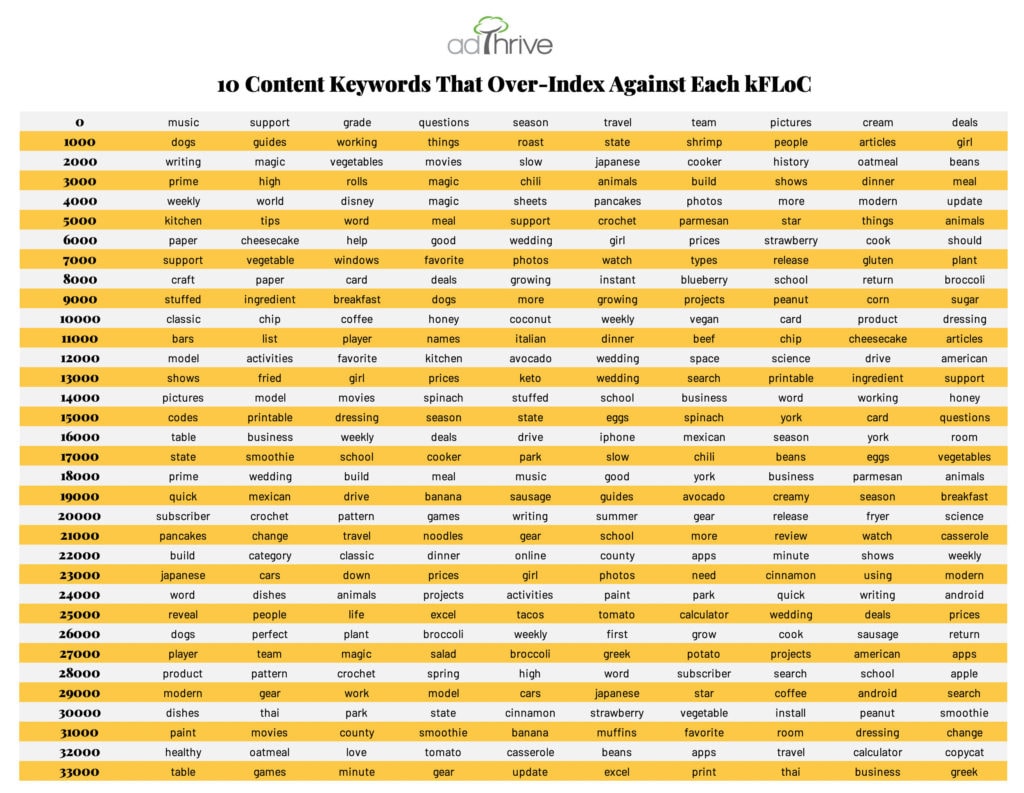
-735 minimum number sets of visited domains in a cohort. Content creator CafeMedia's AdThrive did an interesting analysis below on grouping the 34K FloCIDs into 34 sets of 1000 each (they call it KFLoCs) and mapped their top 10 content keywords. On the downside, this analysis shows fuzzy targetable interest patterns at best (foodie, outdoors, travel from a quick glance). Probably part of the reason Google apparently is not extending the trial, but instead are "hard at work on improving FLoC to incorporate the feedback we’ve heard from the community before advancing to further ecosystem testing". IMO, this doesn't mean advertisers should lift their foot off the #cookieless pedal, it is inevitable, given other major browsers have already done this. Personally, I think, if anything, the FLoC experiment highlights the need to hedge your bets with other approaches including building a #firstpartydata ecosystem and/or explore audience #identity consortiums. (https://lnkd.in/eQ3pGx7) #google #thirdpartycookies #audiencetargeting #addressability #cookieless 


WFH email explosion- time to retire your inbox?

 At an average minute per email (those that need a response needing more, others less), that meant 2 hours per day working through emails. With pandemic WFH, that has gone up by 50%. So you have to set aside up to 3 hours per day to deal with email. And you have to come up with strategies to block off this time especially If you have back to back meeting days. So I am all for simpler communications (and rules around email lengths- no more 3 page essays!). But project chat boards do need better organizing- love the ability to call out a specific person using @, but I should be able to filter by team member or topic.

New Product Marketing Playbook (in other words, they won’t come just because you built it)

Let’s face it- given the poor performance of most innovations, that new product you are working on doesn’t have the averages in its favor. Most innovations are going to be mediocre at best- an HBR article quotes “Less than 3% of new consumer packaged goods exceed first-year sales of $50 million”. That means marketers and product managers that place a bet on an innovation are more likely to be “explaining” its performance than have it be an accolade on their annual performance review.
And yet every successful marketer or company will unanimously agree that innovation is the lifeblood of growth. Innovation is vital to offering a better product or service, managing your business more efficiently and/or effectively and as a safeguard against competitive share losses. Unless of course you are the only game in town- if you are, then congrats, you may stop reading right now. If you are like the rest of us and not running a monopoly operation then hopefully some of this post will be of relevance.
There are really only 3 major ingredients to orchestrating a successful innovation agenda- a good product, one that is relevantly differentiated, a Marketing strategy that engages your target market with the right message at the right place and time and a consumer intelligence apparatus that allows you to course-correct rapidly. Note I said “successful innovation agenda” not “successful innovation”. Secret to innovation sanity is not betting all your money on a single idea but beating the average through a portfolio of innovations (unless you are a startup, then its OK to be all in on the one big bet).
Check the full article out on LinkedIn:

3 under-appreciated trends in consumer behavior (and resultant imperatives for marketers)

The US economy is heavily consumer dependent- that is pretty much stating the obvious. What we seem to be oblivious to is how much the consumer that drives the economy has changed since the Great Recession. We do however feel the symptoms- the tried and tested remedies of the past struggle to drive momentum. Profits stagnate- data from the Bureau of Economics indicate corporate earnings have been in decline since 2012 after staging a recovery following the recession. 
Many marketers are opting to simply take price up as demand stagnates without truly understanding the shift in consumer behavior that is making past playbooks irrelevant. Below LinkedIn in post hones in on 3 familiar yet often underestimated trends that are directly shaping the interplay between consumer behavior and marketing strategy.

Mike Walsh on building businesses for the 21st century @ IRI CPG Summit, Orlando-FL...


As I am recovering from the 2 months of prep-work that culminated in IRI’s premier annual event last week in Orlando, I was thinking of some of the keynote speakers and this guy Mike Walsh popped up in my mind. Mike is a self-described “globally renown (ed) futurist and keynote speaker on future trends, innovation and how to build companies for the 21st century. BTW Mike if you read this, not sure if you noticed the typo on your home page meta id descriptor, I know it is nit-picking but Google indexer  has already picked it up with the typo J.
So in his very entertaining presentation, he had these things he calls “mind grenades” (basically key takeaways) and two stood out-
1.       If your kids had your job, what is one thing they would do differently? First I thought, is he asking us to bring the Crayola set or the Wii to work (depending upon how old your kids are)? Then as I thought more, it made perfect sense. Mike's point was to recruit the next generation of thought leaders and see how they would approach your tasks from their vantage view. Cool.
2.       What is something that your customers do today that drives you crazy? (Hmm, where do I start?) So the point here is that the points of friction between the service you are trying to provide somebody and how they are trying to consume it is an opportunity for innovation, and therefore, engagement. Freakin awesome! (and simple, why didn't I think of this??).

My two cents- every business today and in the future needs to create a “simplicity filter”- a device or process that takes every product or service you design and score it- a plus for features that make it simple and a minus for things that make it complex. If the pluses are not twice as many (at least) as the minuses, pull it off the market. Life is getting increasingly complex and if your product adds to that complexity rather than taking away from it, you are doomed from the get go...

IRI CPG Blog Post: Surf’s up! Time to Ride the Online Video Wave?

Posted on the IRI CPG Blog a couple of weeks back about the traction Online Videos have been getting in the industry in direct competition to traditional TV advertising.

The post highlights 3 reasons to get in on Online Videos today:
  1. Efficiently enhance your message reach on traditional TV
  2. Test your TV campaigns
  3. Reap early adopter benefits
Check the original post out here.